When a building changes hands
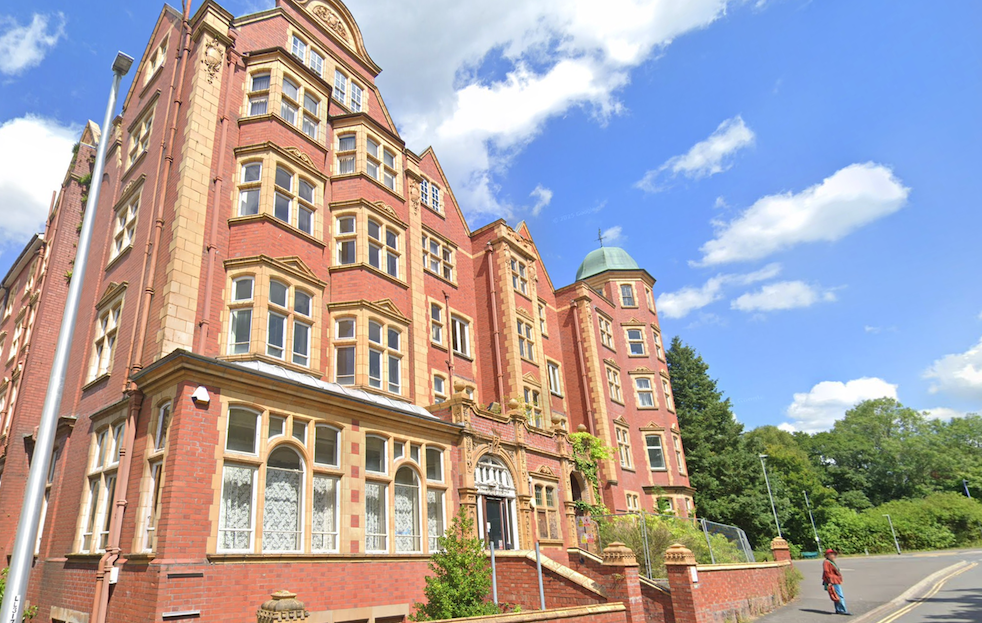
The former college building in Llandrindod Wells went to auction last week.
On paper it was a five storey commercial property in need of refurbishment. A redevelopment opportunity. Scope for conversion. Potential uplift.
That is how these buildings are described when they reach the market.
But in a town like Llandrindod Wells, buildings are rarely just lots. They are markers of particular moments in the town’s history. And this one belongs to a period when Llandrindod was still building with confidence.
If you stand back and look at Spa Road properly, you can see it. The scale. The ambition. The sense that the town expected to be seen.
The growth of a Victorian Spa town
Llandrindod did not grow by accident. The railway brought visitors in the late nineteenth century. The spa trade followed. Investment followed that. Hotels, boarding houses, institutions and civic buildings were constructed with real presence. They were not temporary. They were statements.
The former college building reflects that era. Its height alone sets it apart. Five storeys in Llandrindod is not incidental. It was designed to command attention and to hold the street.
That matters.
Architecture as a record of confidence
One of the things conservation work teaches you very quickly is that buildings record confidence as much as they record use.
When a town believes in its future, it builds in brick and stone with permanence. Generous ceiling heights. Proper proportions. Materials chosen to last. Detailing that was not strictly necessary but added weight and character.
When you walk past buildings from the spa period in Llandrindod Wells, you can still feel that intent.
Over time, uses shift. They always do.
Internally, layouts are reworked. Services are added. Partitions come and go. Suspended ceilings appear. Original joinery disappears in places. Some of it returns during later repairs. The fabric carries those layers.
The cumulative character of a town
The real question is not whether change happens. It always does.
The question is whether change is guided by an understanding of what is significant.
Llandrindod Wells is not defined by one building alone. It is defined by the accumulation of many. The Glen Usk Hotel. The Metropole. The civic buildings. Terraces that share scale.
That rhythm is subtle but important. Remove too much of it and something shifts in how the town feels.
This is often overlooked in auction particulars. It is understandable. Auctions deal in figures and timelines. Architects and conservation specialists deal in context.
A five storey building in isolation is a development opportunity. A five storey building within a spa town streetscape is part of a much wider composition.
That composition is fragile.
Conservation is not nostalgia
There is sometimes a misconception that conservation work is about sentiment.
It is not.
It is about understanding hierarchy. What matters most. What can change without undermining the whole. Where modern interventions can sit comfortably and where they cannot.
At Hughes Architects, that conversation starts early in any heritage project. Before design ideas are developed, there is a period of looking. Surveying. Researching. Understanding the building’s construction and the era that produced it.
We have seen this first hand in Llandrindod Wells.
The Glen Usk Hotel is an obvious example. It is not just a large building. It is part of the town’s identity. The proportions, the detailing, the relationship to Temple Gardens. All of it contributes to how the town reads architecturally.
Intervening in a building like that requires discipline. You cannot simply overlay a new idea. You have to work with what is already there.
Cross Buildings demanded a similar approach. Understanding the original structure and respecting it shaped the design response. The aim was not to recreate the past. It was to allow the building to function properly in the present without erasing its history.
That is usually the balance. Viability and heritage are not opposites. But they do require careful alignment.
The responsibility of new ownership
The former college building now has a new owner. That is a turning point.
With the right approach, buildings like this can become anchors again. They can support town centre living. Provide commercial space. Encourage footfall. Contribute to regeneration that respects context.
Without that care, they risk incremental erosion. Unsympathetic alterations. Loss of detail. Gradual dilution of presence.
No single decision destroys a building’s character overnight. It tends to be a series of small compromises.
In a place like Llandrindod Wells, where the architectural identity is closely tied to its spa history, those compromises add up.
Looking properly at what is already here
One of the simplest but most overlooked steps in any heritage project is to stand back and look.
Look at the street as a whole. Look at neighbouring buildings. Look at materials and rooflines. Understand why certain proportions feel right in that context.
The Spa Road East building was designed within that framework. It belongs to it.
As architects working regularly with listed buildings and conservation areas, we see the long term effects of both good and poor decisions. Good conservation work often goes unnoticed because it feels natural. Poor interventions stand out for decades.
The recent auction is just the start of a new phase for this building. It will need investment. It will need a clear vision. Most importantly, it will need an understanding of where it sits in the wider architectural story of Llandrindod Wells.
Buildings like this are part of the town’s memory. They deserve careful thought before the next layer is added.
Time will show how this one evolves.