Planning ahead ensures a smooth building project
For many people, the idea of a building project starts with construction. The builders arrive, the walls come down and progress becomes visible. In reality, the most important part of any project happens well before that point.
If you are thinking about extending, renovating or building later in the year, the early months are when the foundations of the project are really laid. Decisions made at this stage often determine how smoothly the project runs, how much it ultimately costs and how well the finished building works.
Surveys, drawings, design development, and planning
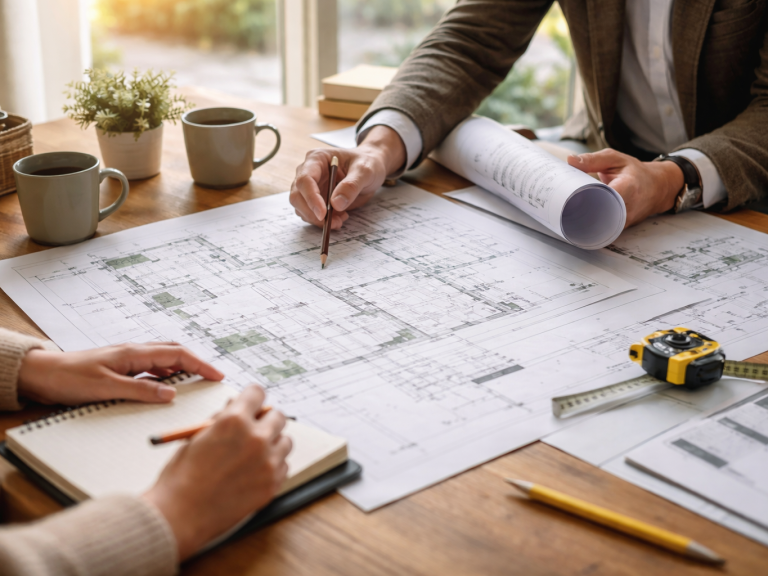
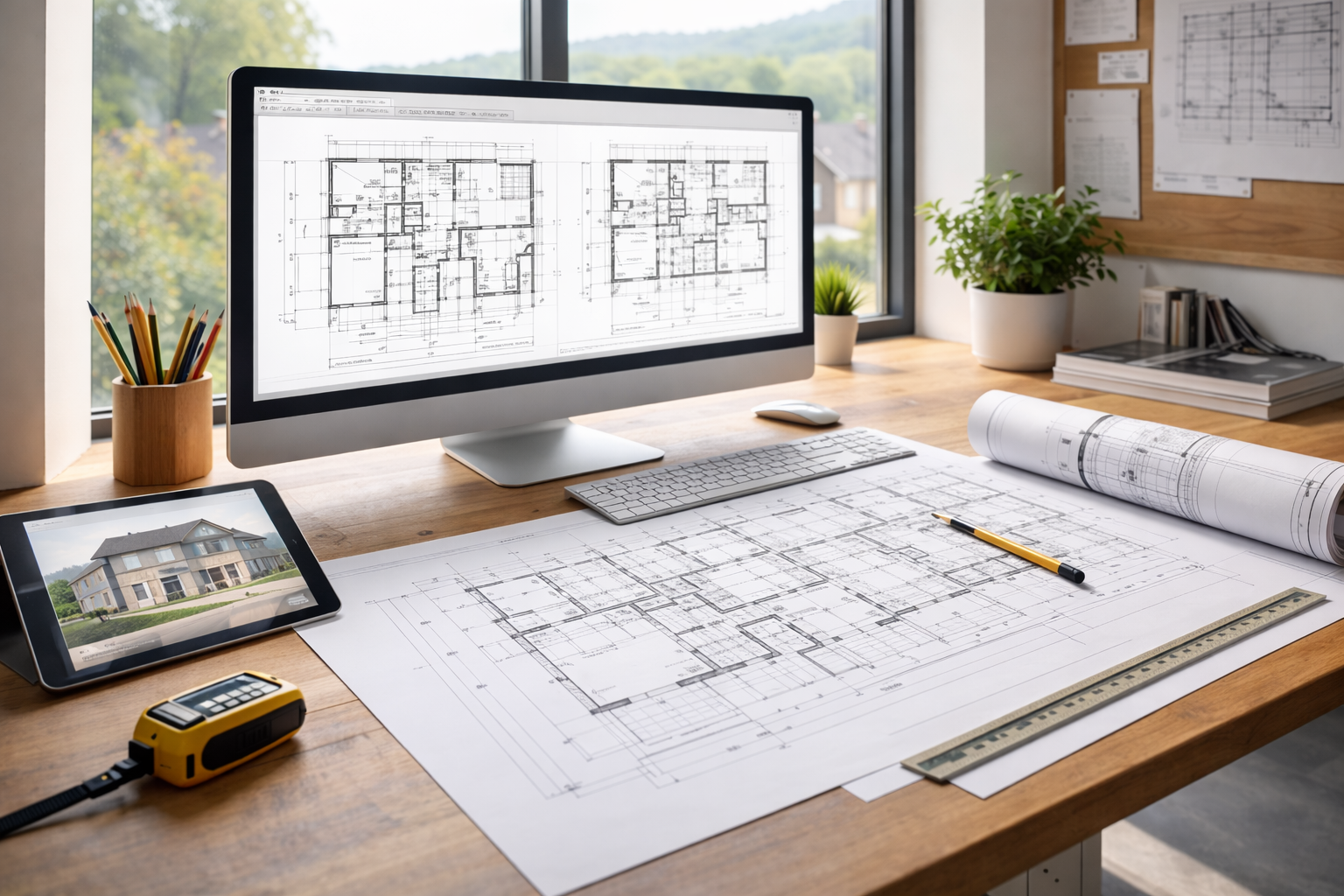
One of the most common misunderstandings is how long the early stages of a project can take. Surveys, measured drawings, design development and planning applications all require time and careful consideration. In areas such as Powys, Ceredigion and Shropshire, where conservation areas, listed buildings and sensitive landscapes are common, this process can be more detailed and requires early engagement with planning authorities.
Rushing these stages can create problems later. Designs may need to be revised, budgets can become unclear and expectations may not align with what is realistically achievable. Taking time at the beginning allows options to be explored properly and potential challenges identified before they become costly or disruptive.
Early planning also gives clients the opportunity to think more carefully about how they want to use their space. Many projects evolve significantly once conversations begin, with layouts refined and opportunities identified that were not obvious at first glance. These discussions are far more productive when there is no immediate pressure to start building work.
More time to think carefully about a project
From a practical perspective, starting early also helps when it comes to construction later in the year. Contractors’ schedules often fill up quickly, particularly during the spring and summer months. Having designs developed and approvals in place means projects are better positioned to move forward without unnecessary delays.
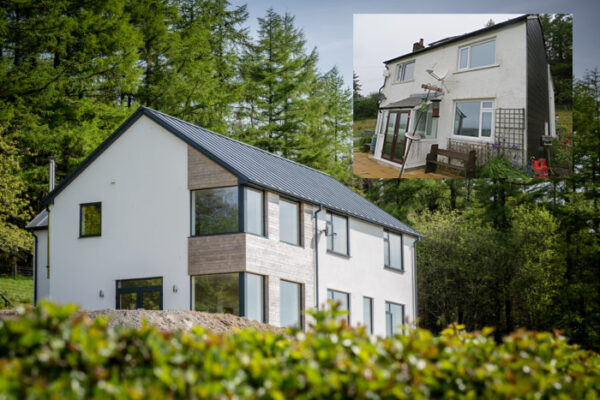
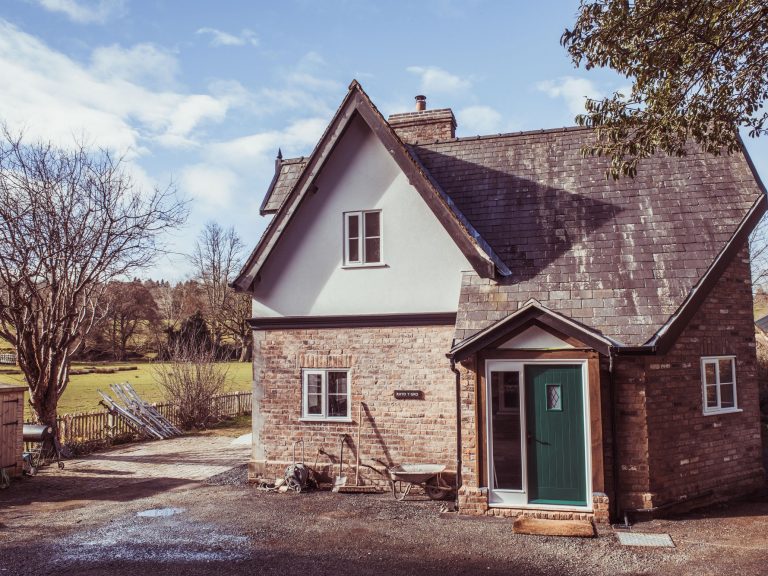
Hughes Architects works with clients across Mid Wales and Shropshire from its offices in Welshpool, Newtown and Shrewsbury. This local presence allows the practice to understand the distinct character of different towns, villages and rural settings, and to tailor designs accordingly.
Good architecture is not about rushing to a finish line. It is about asking the right questions early, understanding context and making informed decisions that result in buildings which work well now and into the future.